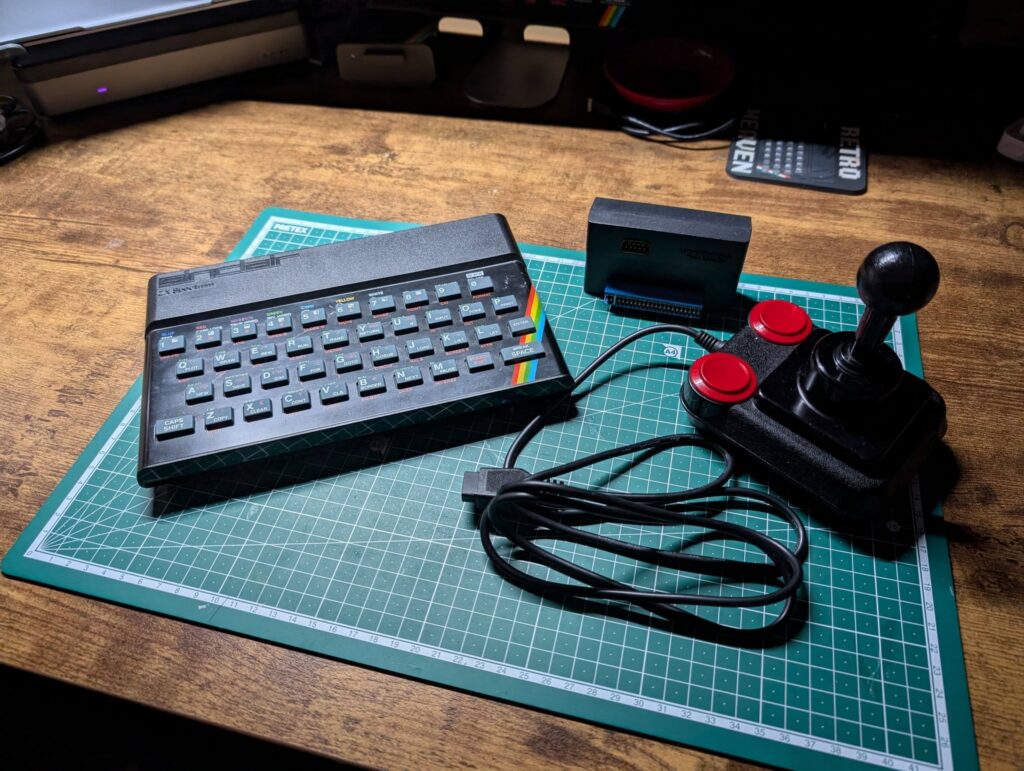
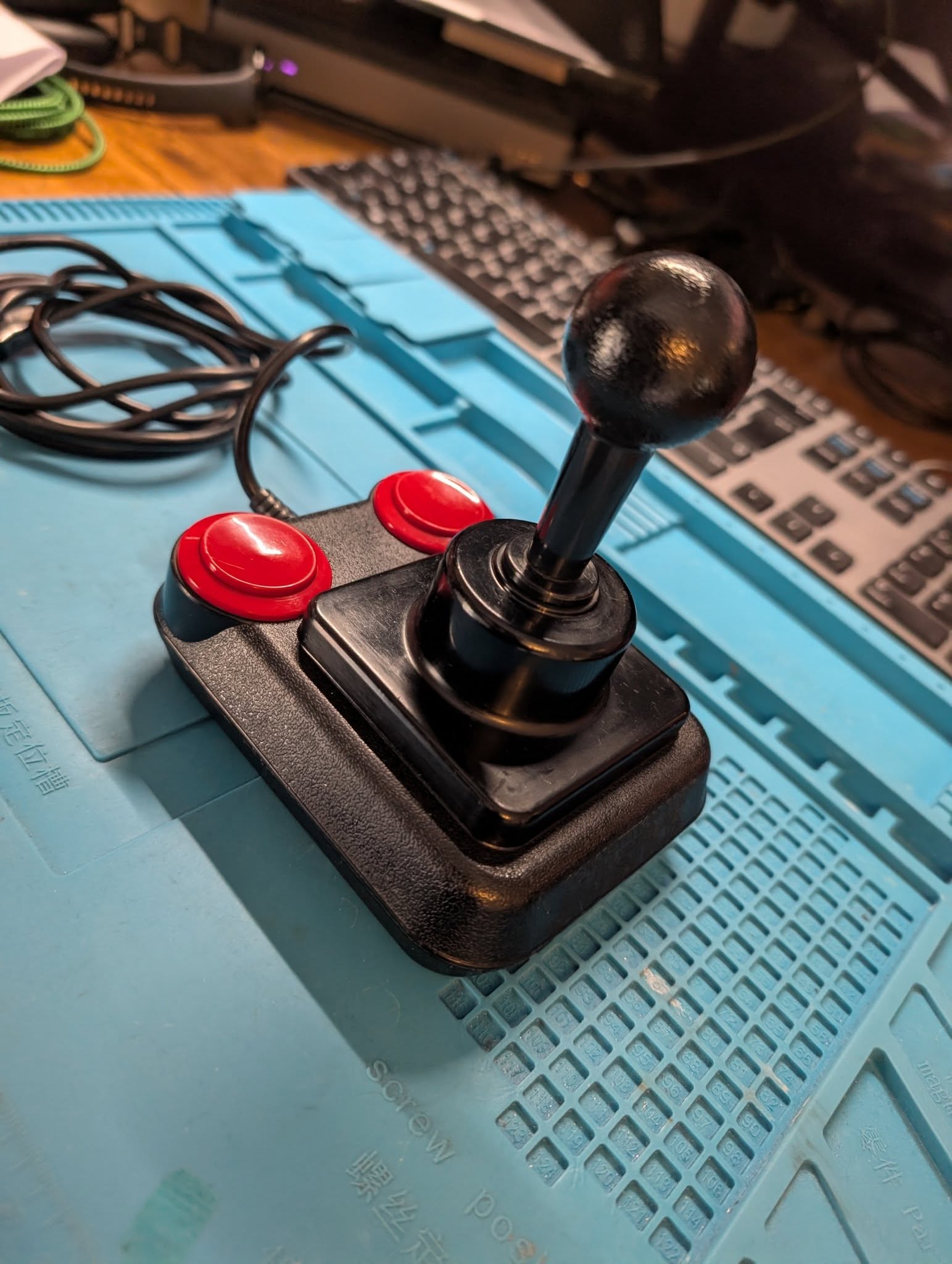
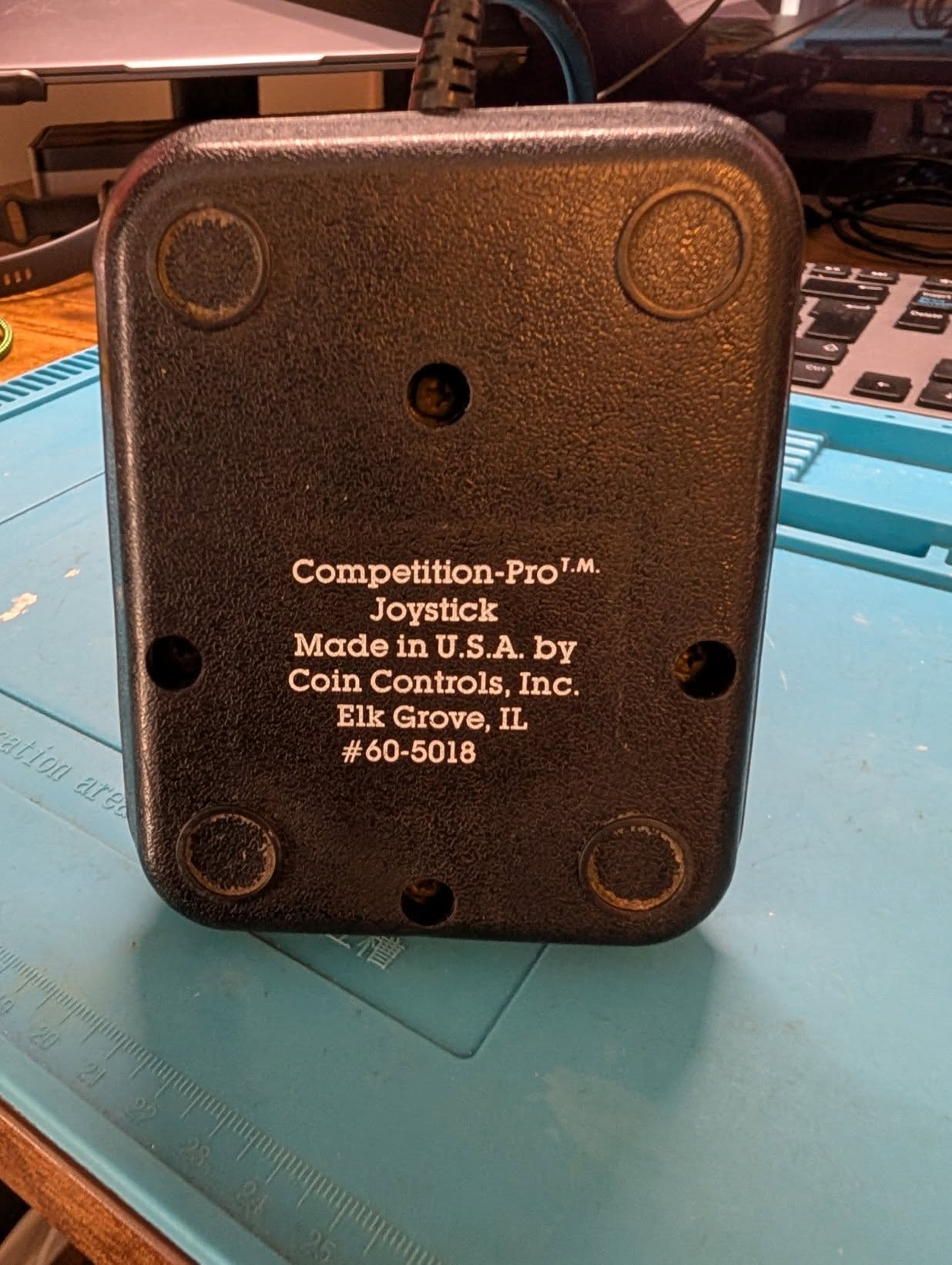
I recently picked up this Kempston Competition Pro joystick on eBay for £20. It was listed for spares and repairs, so I couldn’t resist buying it to restore and add to my Sinclair collection. I never had one of these as a kid—back then, I used the Protek/Quickshot pack, which emulated the 5, 6, 7, and 8 cursor keys. Getting an original Kempston to play games on original hardware feels like a real bonus.
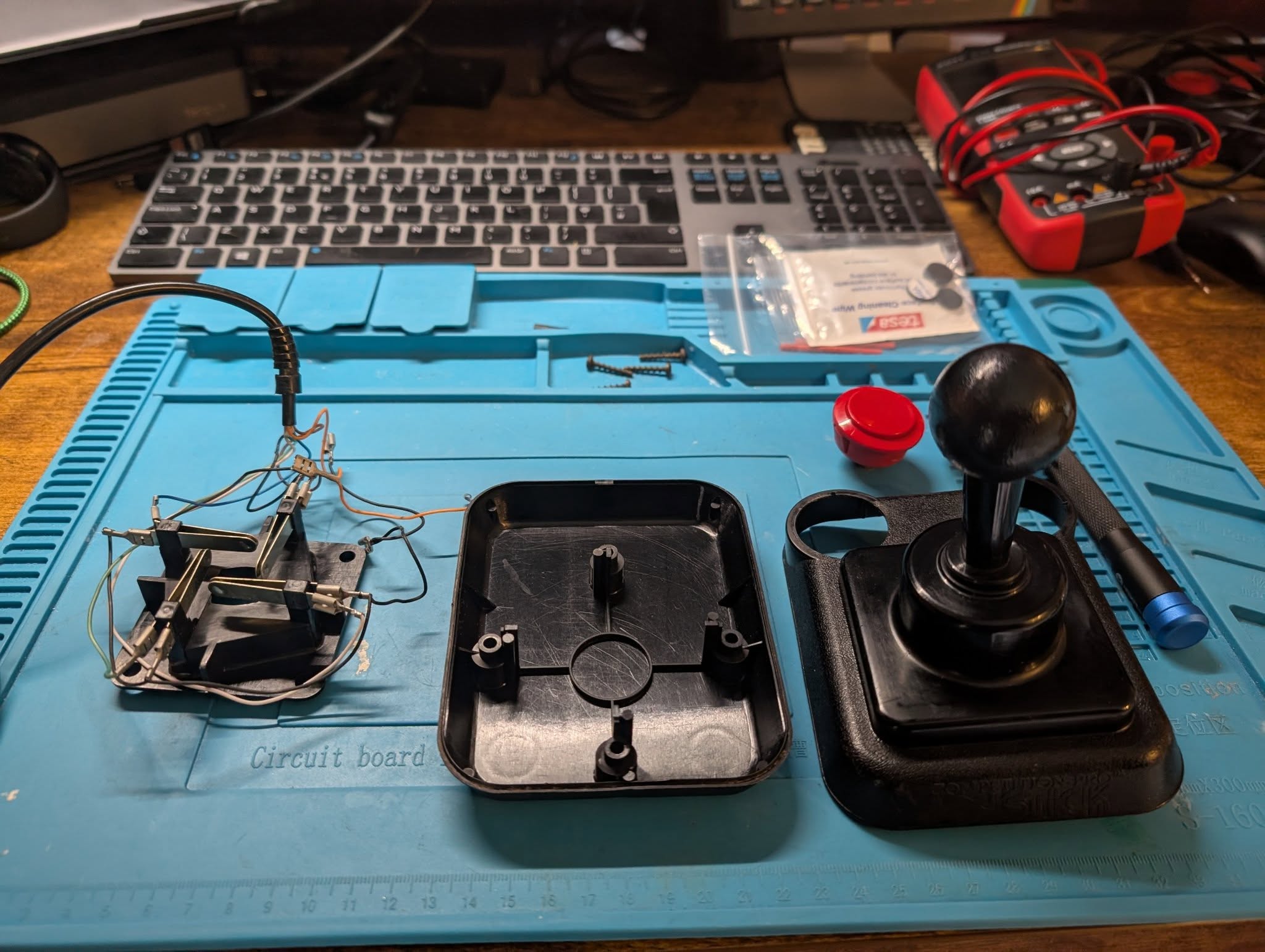
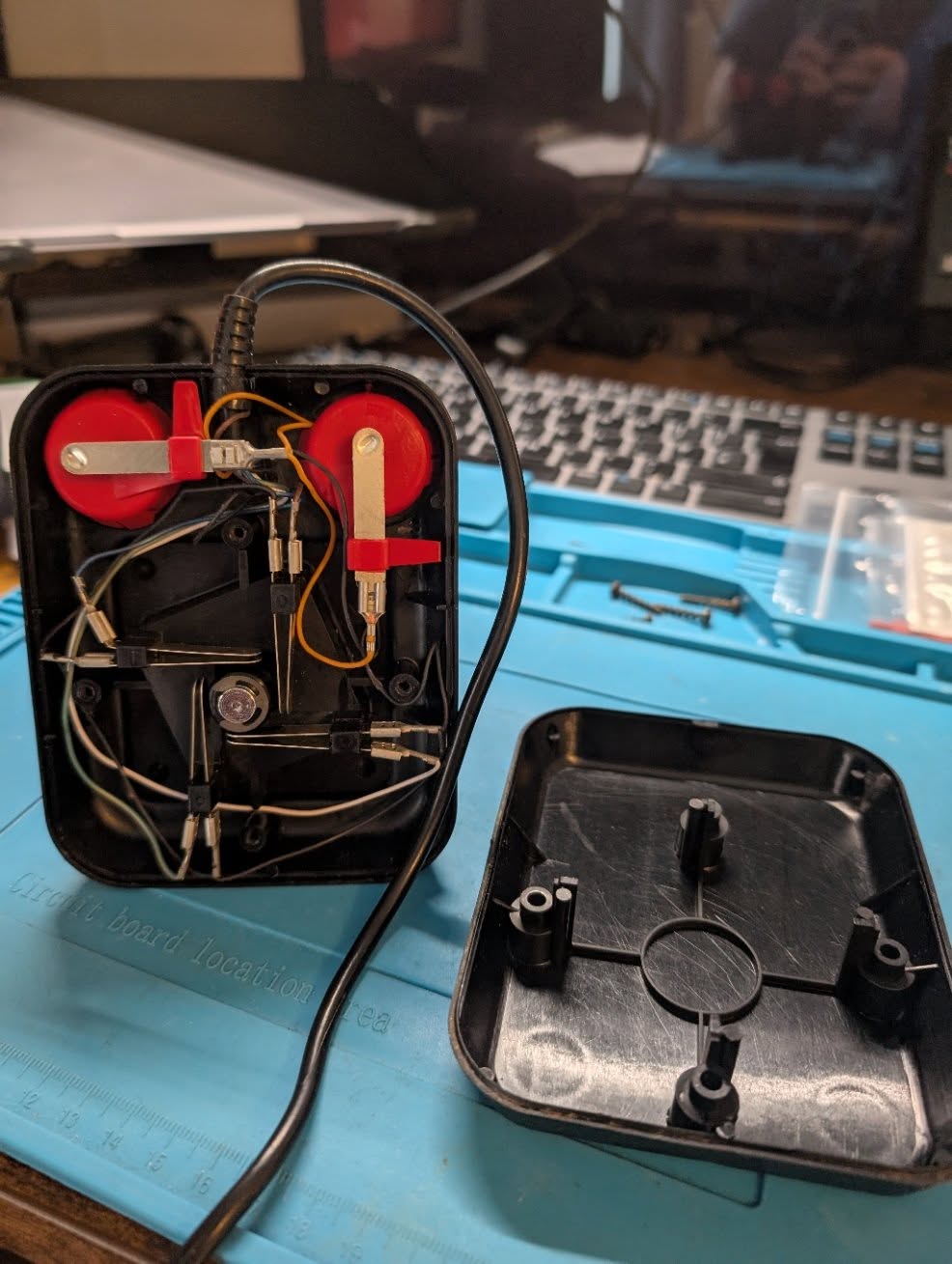
When I first tested the joystick, neither the fire buttons nor the left direction registered at all. I took it apart for a quick teardown and gave it a good clean with contact cleaner. While this successfully fixed the fire buttons, the left movement is still completely unresponsive.
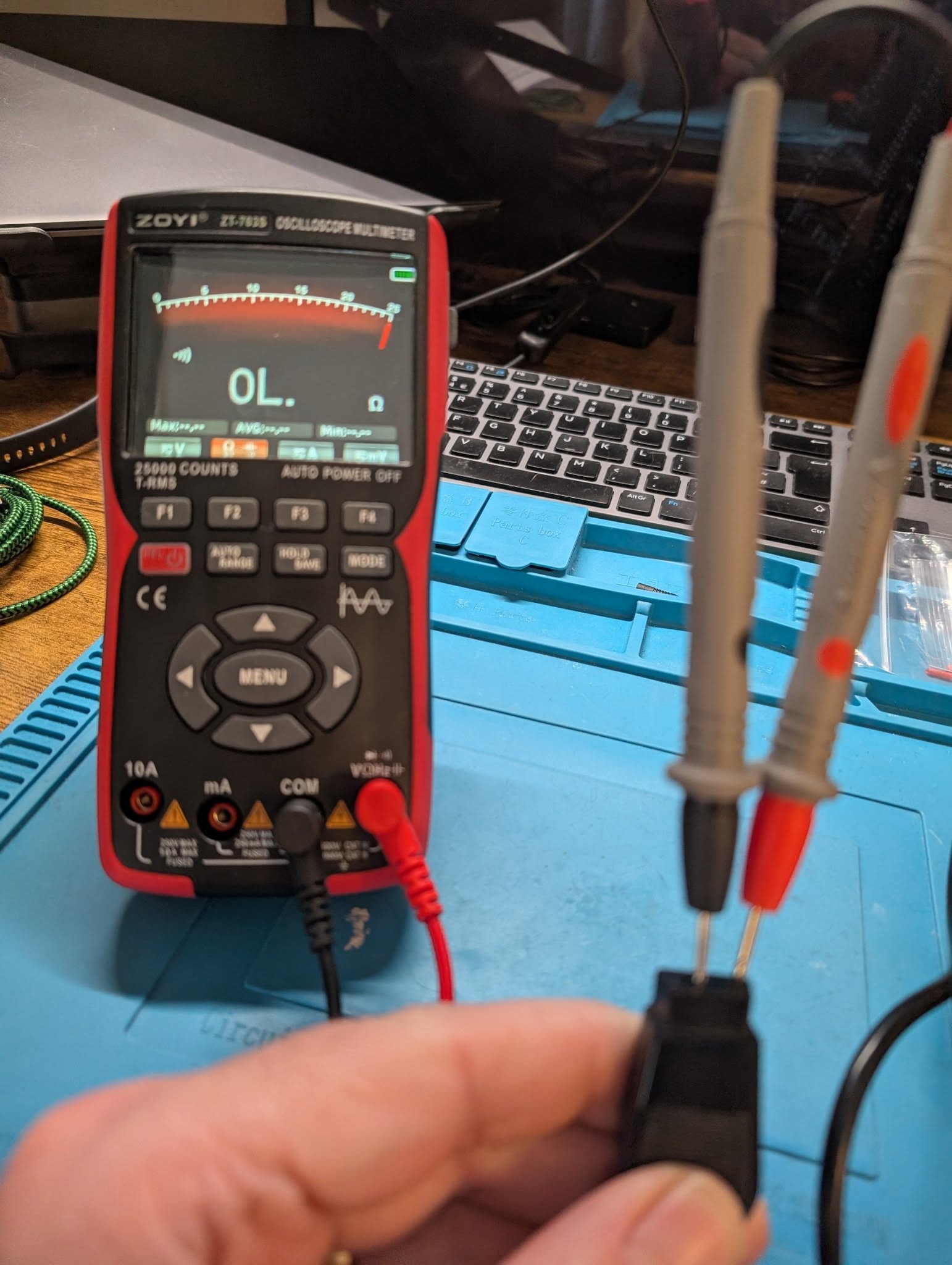
Since the contacts were clean, the next step was to test continuity between the DB9 connector and the internal contact points. With the female connector facing me, I mapped out the pinout using a multimeter. I attached one probe to the ground line (pin 8) and used the second probe to check pins 1 through 5 while moving the joystick up, down, left, right, and pressing fire to confirm the correct pinout. This process was repeated for each pin creating the following wiring guide.
| Joystick Position | Core Colour | Pin No. |
|---|---|---|
| Joystick Up | Brown | Pin 1 |
| Joystick Down | Green | Pin 2 |
| Joystick Left | Blue | Pin 3 |
| Joystick Right | White | Pin 4 |
| Fire Buttons | Orange | Pin 6 |
| Ground | Black | Pin 8 |
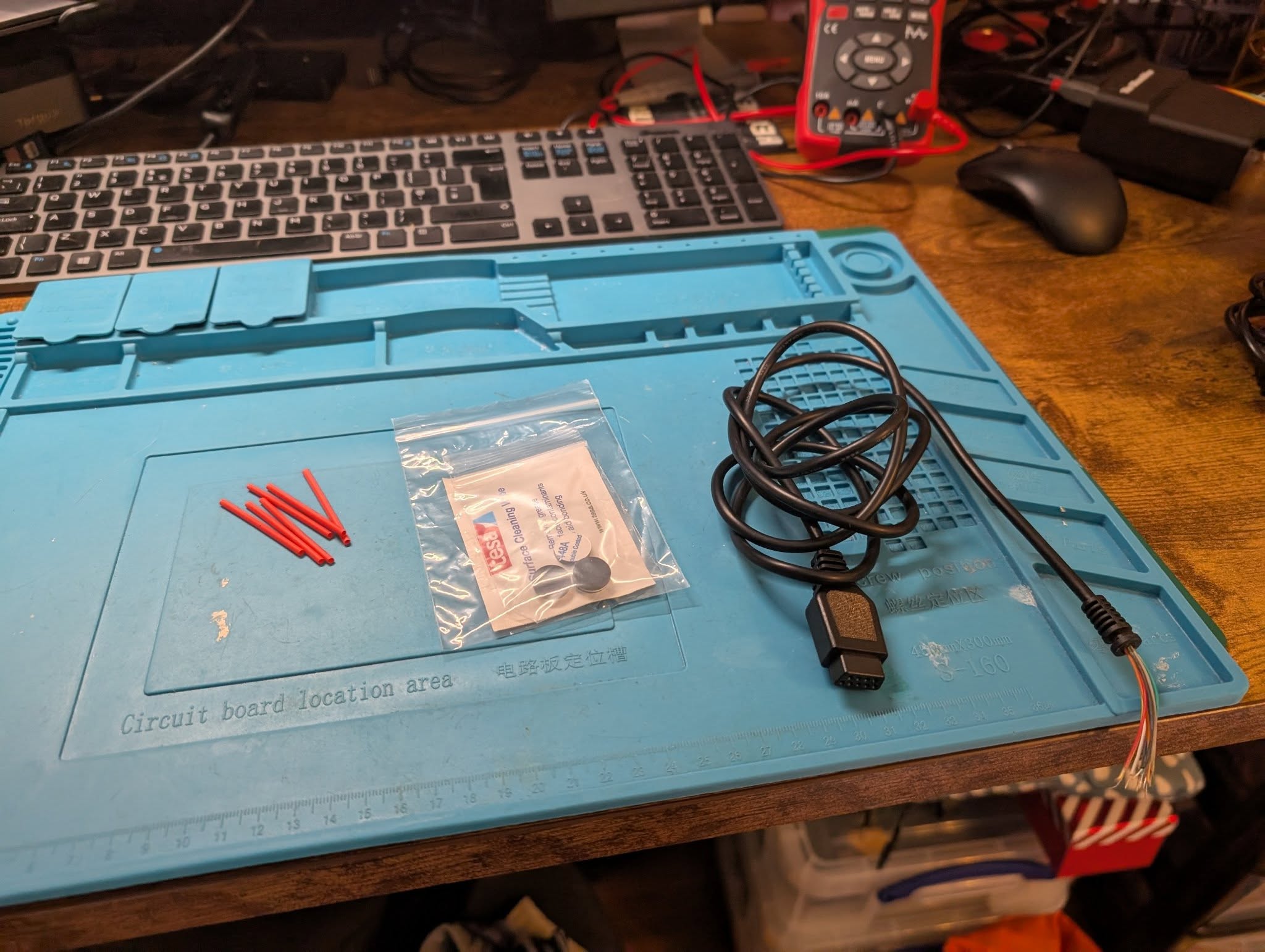
After testing all the pins for continuity with a multimeter, I confirmed a break in the cable line for pin 3. The most straightforward solution for this restoration was to order a new DB9 joystick cable, along with some silicone rubber feet to replace the missing or worn original pads. I ordered the replacement parts from Retroleum, and as always, Phil Rushton ensured super-fast delivery. The Bill of Materials (BOM) for this project consisted of:
| Item | Cost |
|---|---|
| 1.5m Replacement Joystick Cable | £2.99 |
| Silicone Feet | £1.50 |
| Total | £4.49 |
The replacement 9-core cable has all pins fully wired. However, because its core wire colours are proprietary and do not match the original joystick wiring, care must be taken during installation. Additionally, the loose cores extending from the strain-relief grommet must be spliced directly into the existing wires inside the joystick housing, insulated with some shrink wrap tubing.
| Joystick Position | Old Core Colour | New Core Colour | Pin No. |
|---|---|---|---|
| Joystick Up | Brown | Red | Pin 1 |
| Joystick Down | Green | Black | Pin 2 |
| Joystick Left | Blue | Grey | Pin 3 |
| Joystick Right | White | Orange | Pin 4 |
| Fire Buttons | Orange | Green | Pin 6 |
| Ground | Black | Blue | Pin 8 |
The wiring phase took roughly 40 minutes of stripping, tinning, and soldering. Following this, the joystick housing was cleaned using warm, soapy water and a toothbrush, ensuring the original factory branding on the underside remained intact. After confirming continuity on all connections, the unit was reassembled and fitted with the new silicone feet.
To test the joystick on a working ZX Spectrum, I wrote a short Sinclair BASIC programme to verify that the correct signals were being sent to the computer:
10 PRINT AT 0,0; IN 31;" " : GO TO 10
Final testing was conducted using the classic Spectrum game Atic Atac, and the joystick performed flawlessly.
Project Image Gallery
In summary
This was a fantastic project to tackle in an afternoon. Bringing the total investment for the joystick and replacement parts to just £24.49, the entire restoration was incredibly cost-effective. Interestingly, back in the mid-to-late 1980s, a new Competition Pro typically retailed between £15 and £25 in the UK, depending on the specific model and premium features like autofire. Getting a fully working, restored original today for roughly its original retail value feels like a massive win!
Links
Retroleum is a UK-based online retailer specializing in spare parts, cables, and modification tools for vintage 1980s home computers. It is primarily a go-to resource for enthusiasts looking to restore and maintain classic gaming and computing systems.